
Helping Children Feel Understood. Helping Families Thrive

At LittleKind Psychology, we specialize in supporting children, teens, and families through both comprehensive assessment and counselling services. Our work is grounded in an attachment-informed, relationship-focused approach that recognizes the importance of feeling understood, connected, and supported. We take the time to understand the whole child- not just their challenges- and work alongside families to build on their strengths, navigate challenges, and create the conditions for children and families to thrive.
Learn more about our approach below, or reach out now to book a free 20-minute consultation

Our therapeutic approach
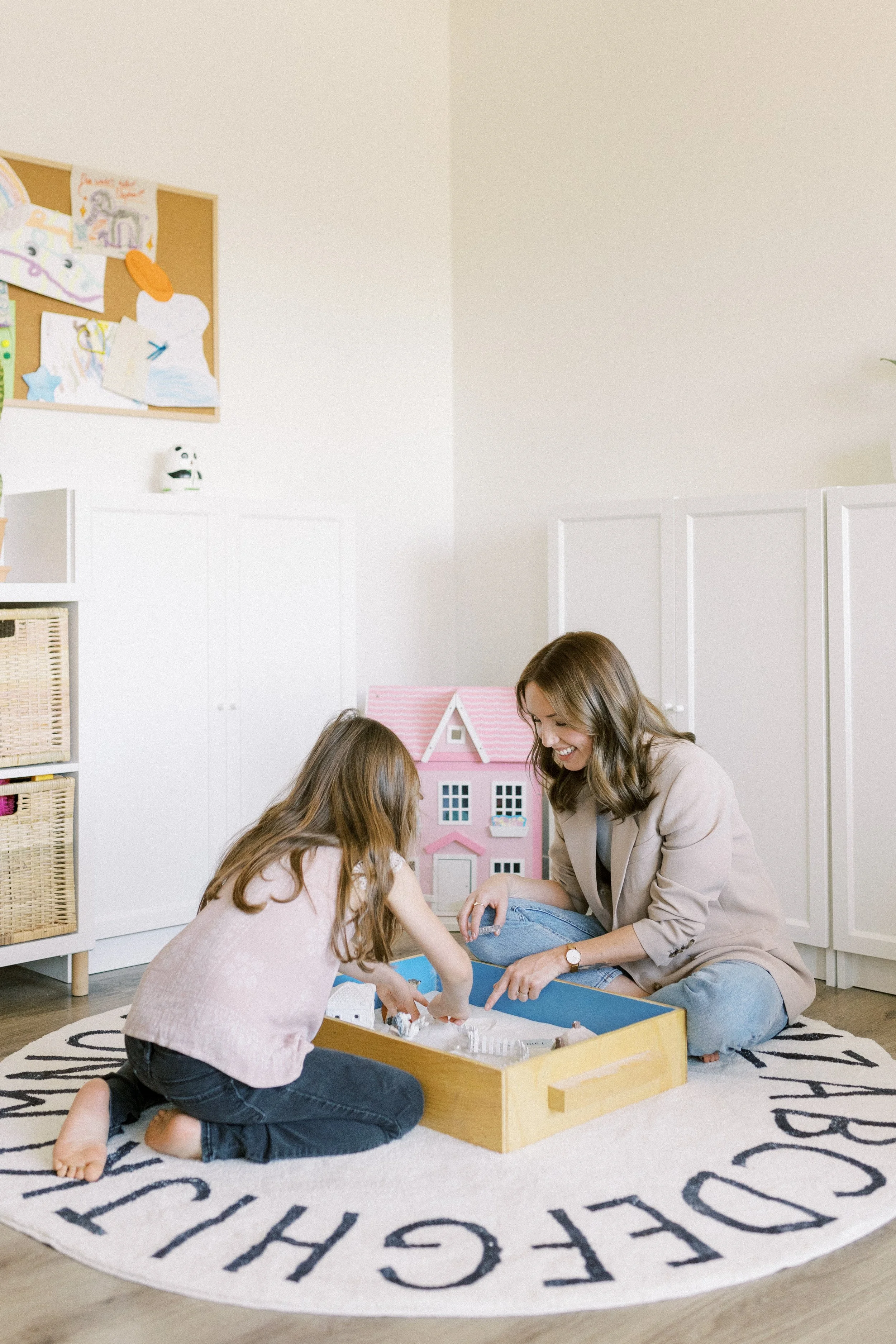
The heart of our work is supporting the little ones of humankind and those who love them. At LittleKind Psychology, we believe that we all have a natural desire for growth and authenticity and that children have a lot to teach us about our relationships to ourselves and others. We take a child-centered, attachment-informed approach, and meet each kid and family where they currently are with a non-judgmental attitude of acceptance. Through the therapeutic relationship, we use playful and creative interventions to connect with and more deeply understand difficulties and to work toward improvement in functioning and relationships. We draw heavily from play therapy, expressive arts therapy, attachment-based, and trauma-informed interventions like EMDR in addition to more traditional talk therapy approaches including ACT, CBT, and DBT. We believe that parents are a tremendous resource to supporting the growth of children and enjoy working collaboratively to promote family functioning.
Ages & Stages of Therapy
Little Ones (2-5 years old)
We use play, art, and creative activities to help little ones express their feelings, build skills, and make sense of their world, with parents closely involved in supporting their growth both in and outside of therapy.


Children (5-12 years old)
We blend play, creativity, and age-appropriate talk-based therapy to help kids understand their emotions, navigate challenges, and build confidence, while keeping parents meaningfully involved along the way.

Teens (13+ years old)
We create a supportive, judgment-free space where teens can talk openly and work through challenges in ways that feel right for them, with parent involvement tailored to support their independence and keep therapy feeling like their space.

Our assessment approach
Our approach to psychoeducational and diagnostic assessment is grounded in respect for each child’s unique developmental profile, relationships, and lived experience. We offer comprehensive, thoughtfully integrated assessments that bring together cognitive, academic, social-emotional, and behavioural information to form a meaningful picture of the whole child.
We practice from a neuro-affirming lens and approach assessment with curiosity and compassion, aiming to understand how a child experiences the world, rather than viewing differences as deficits. Our goal is to help children feel seen and understood, while supporting families in making sense of their child’s strengths and needs.
We provide clear, practical, and individualized recommendations that are tailored to each child so that recommendations feel both supportive and realistic in everyday life. We also have a particular interest and expertise in identifying the nuanced female presentation of Autism Spectrum Disorder (ASD) and those who may be missed by more traditional assessment approaches. We take care to consider masking, social adaptation, and internalized experiences, ensuring that these more subtle profiles are recognized and accurately understood. Ultimately, our aim is for families to leave the assessment process with clarity, confidence, and a deeper connection to their child.
Client focus & specialization
We work primarily with children, teens, young adults, and families in the following areas:
Trauma and Post-Traumatic Stress Disorder (PTSD)
Anxiety
Depression
Sexual and Physical Abuse
Divorce/Separation
ADHD
Attachment and relationship difficulties
Adjustment and life transition concerns
Psychological and Psychoeducational assessment
Neurodevelopmental differences (Learning disorders, ADHD, and ASD including the female presentation of ASD)

We’d love to hear from you!