
Play Therapy
Wondering if play therapy might be right for your child?
Learn more about our approach below or reach out now to schedule a free 20-minute consultation with our child psychology specialists
Child Play Therapy in Calgary

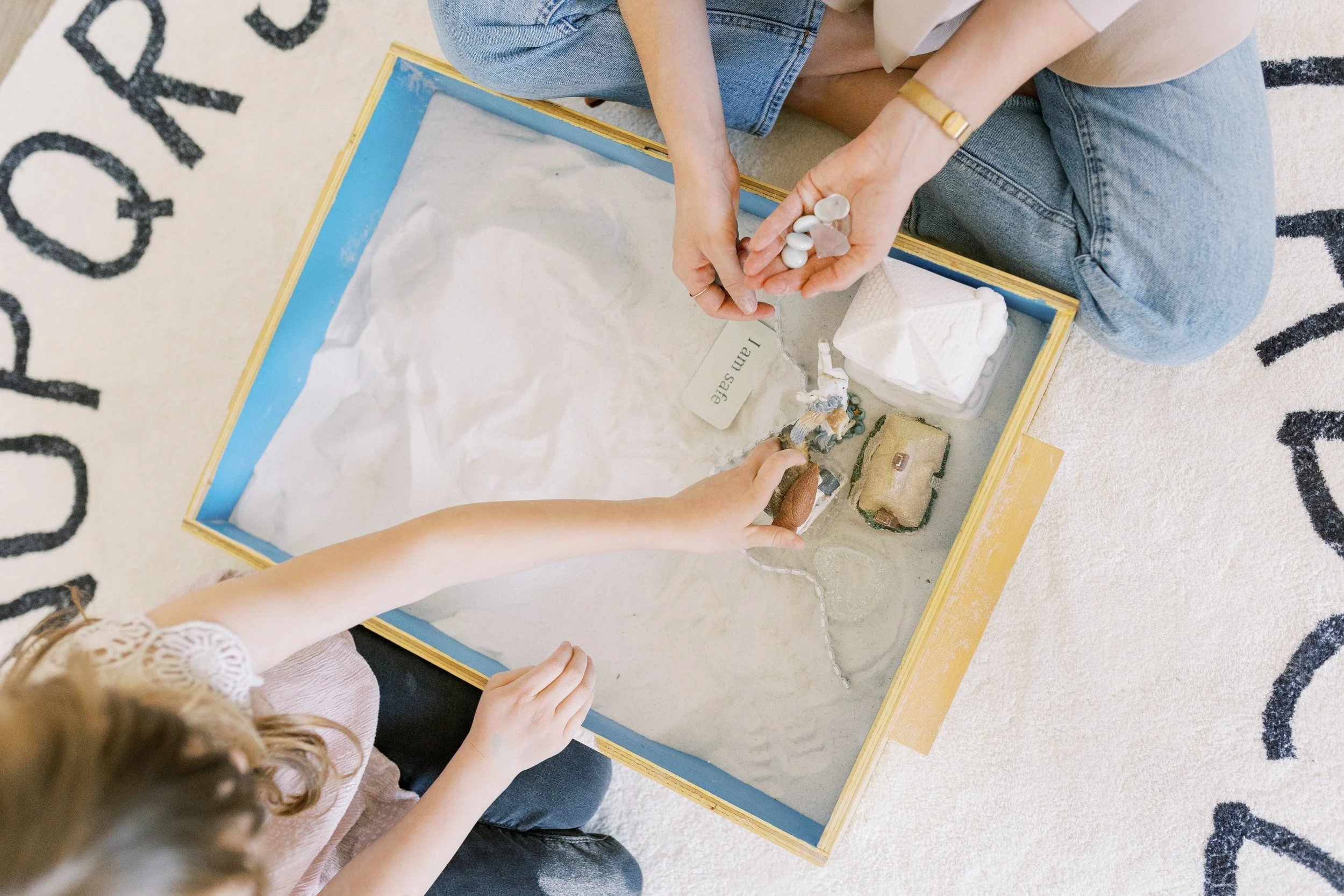
Play is a child’s natural language, and through play, children express thoughts, feelings, and experiences that they may not yet have the words to share. In play therapy, we create a safe, accepting space where children can communicate in the way that comes most naturally to them- through toys, imagination, and creative expression.
Rather than directing the child or focusing on specific outcomes, we follow the child’s lead, trusting in their innate capacity for growth and healing. The therapist’s role is to provide a warm, attuned relationship where the child feels deeply understood, accepted, and in control. Within this space, children are able to explore emotions, process experiences, build self-awareness, and develop confidence and regulation skills at their own pace.
Play therapy can support children in working through a wide range of concerns, including anxiety, big emotions, behavioural challenges, life transitions, and difficult or overwhelming experiences. By meeting children where they are, play therapy allows for meaningful change to happen in a way that feels safe, respectful, and developmentally appropriate.
At LittleKind Psychology, our team of child psychologists has specialized training in play therapy while also integrating approaches like EMDR and TF-CBT to best meet the unique needs of each child.
Research on play therapy has shown promising outcomes in treating children who are dealing with emotional, behavioral, or psychological challenges. Studies have proven the effectiveness of play therapy in improving social skills, reducing anxiety, enhancing self-esteem, and addressing trauma-related symptoms in children. While results vary depending on individual cases, the overall body of research suggests that play therapy can be a valuable and effective approach for supporting children's mental health and well-being.
Two recent meta-analyses reviewed play therapy outcome studies to evaluate the effectiveness of play therapy (Leblanc & Ritchie, 2001, Bratton et al., 2005) and found statistically significant effects for the positive impact of play therapy with school-age children. Based on a very large total sample size, these meta-analytic findings provided robust research evidence for the treatment effect of play therapy.
Much of the current research about play therapy outcomes has also found that positive treatment effects were most significant when a parent was actively involved in the child’s treatment.
